The big insect this year is turning out to be the mole cricket. There are actually two species of mole cricket that might cause damage to the turf by feeding on the roots of the grass. The more destructive of the two is the tawny mole cricket (Scapteriscus vicinus). The other one, the southern mole cricket (S. borellii), does feed a little on the roots of the grass, but is more interested in feeding on small creatures in the soil.
Mole Crickets in the Yard
(Updated: June 7, 2024, 8:41 a.m.)
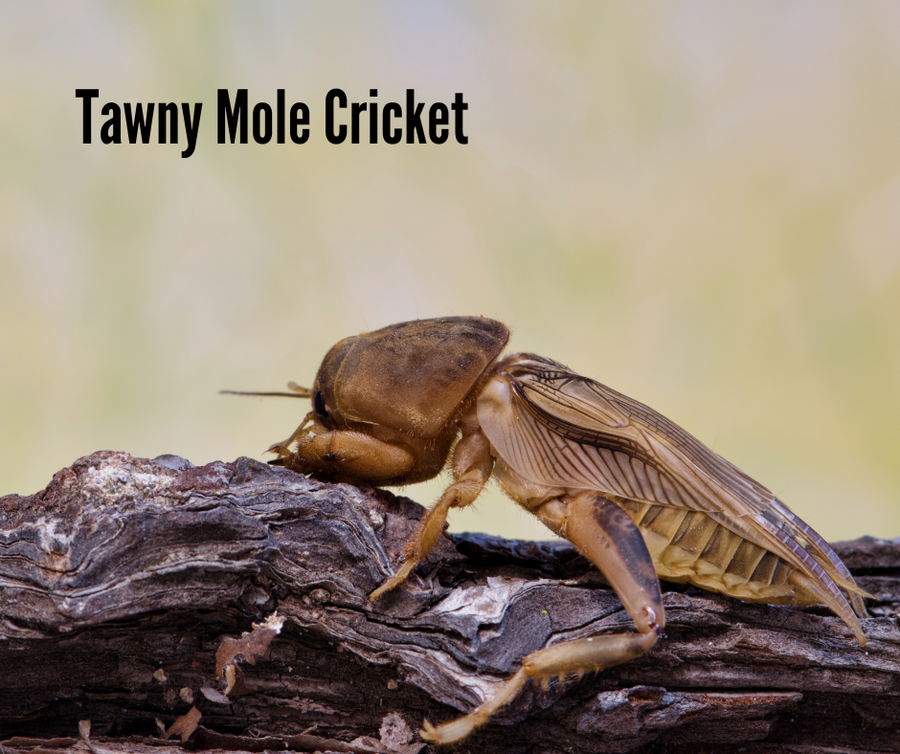
The damage that is typically seen is of an otherwise healthy grass that begins to yellow or thin out for no apparent reason. In March through May holes may appear in thin areas of turf where the males can be found calling for the females to come over and mate. After mating the males die and the females dig a little deeper in the soil, lay their eggs and then they die.
The eggs begin hatching in June, so the best time to apply an insect control product is in June and/or July. Killing the small, immature mole crickets is the best way to control this insect.
A good way to test a thinning area of turf to check for mole crickets is to mix 1 to 2 fluid ounces of liquid dish soap with a gallon of water and pour it over a 2 square foot area where there is an indication of the insects. The crickets don’t like the soap, so they will quickly come to the surface where they can be counted and identified.