Have you wondered if the number of bees and butterflies is dwindling? Would you like to find out for yourself or maybe in the bigger picture help the world find out? The Great Southeast Pollinator Census is a chance for all residents of North Carolina to take one hour out of their day on Friday or Saturday, August 23 or 24 to count pollinators that visit a flower near you.
If you would like to get involved, it doesn’t matter what age you are, you can help count pollinators. This is eco-friendly volunteer activity is open to schools, teachers, students, parents, homeschool groups, businesses, non-profits, and government organizations. It is also an opportunity to ask questions about pollinator plants and insect identification from the experts in their fields. Participation can be by individuals or as a group project.
There is a count sheet that you can download from the official website that shows pictures of carpenter bees, bumble bees, honey bees, small bees, wasps, flies, butterflies and moths, and other insects with some identifying characteristics to help people tell the difference. For example, did you know that carpenter bees have a shiny abdomen (last section of the body) with no hairs, while bumble bees have hairy abdomen? That is an excellent way to tell these two very similar pollinators apart. If more help is desired, there is also a link to a “2024 Insect Counting & Identification Guide” with much bigger pictures and longer descriptions of what differentiates one pollinator from the others.
On the day of the count, pick a flower and count how many pollinators visit that flower in a one-hour time frame. It’s just that easy! After spending an hour counting, log onto the website by scanning the QR code on the count sheet and transfer the data collected to the website.
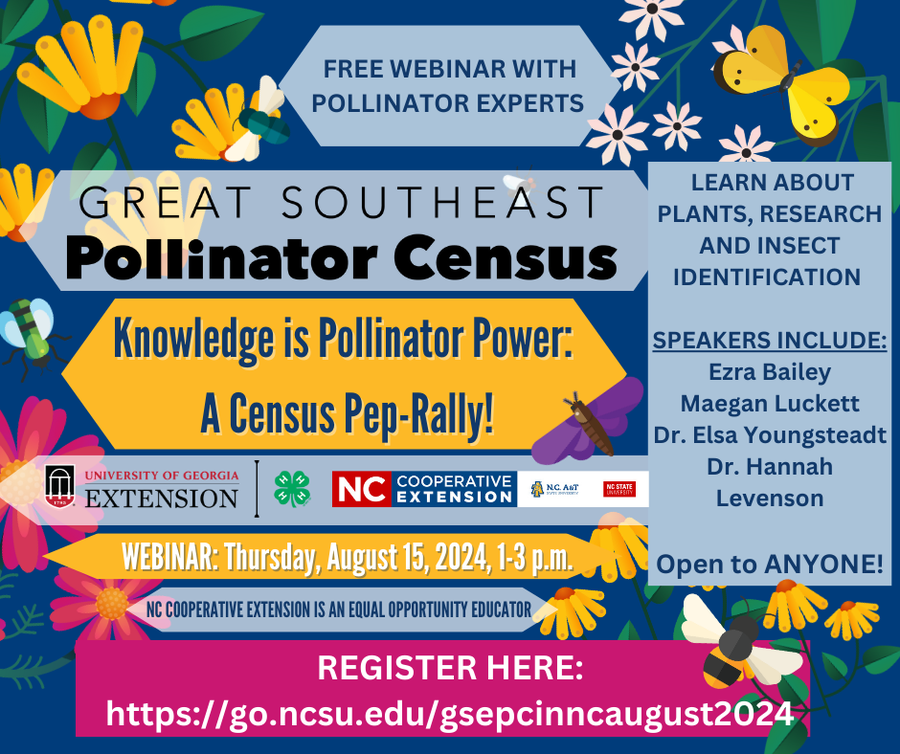
If you want more information or just need a pep talk to convince yourself to get out in the heat can count pollinators for an hour, there is a webinar on Thursday, August 15 from 1-3pm. You must register for the webinar to get the link. The link will be sent the day before the webinar, so you will need to watch your email for the link. The webinar is titled “Knowledge is Pollinator Power: A Census Pep Rally”. I hope I’ll see you on the webinar.
If you have time, I urge you to join the count. Your findings will help contribute to this study, so we can find out if the number of pollinators is actually dwindling or if that is all talk.